Thursday, 20 January 2011

Fonts

We looked at two different fonts most commonly used to design title sequences. This is very important and must be carefully thought about, these are as follows:

Serif Fonts- Such as Times and Courier
Serif fonts are generally more traditional and often slightly more formal than sans serif fonts. (A serif is the extra little detail at the end of each stoke of every letter)


Sans Serif Fonts-such as Ariel and Comic Sans
Sans serif fonts are generally more informal, more modern and more 'friendly'

Font Analysis-
What does the font PALATINO suggest as used in the promotion of PEARL HARBOUR? It shows thta it is quiet formal and important as it stands rather tall (letters). It is in the middle of the poster and all in capital letters so it stands out more clearly. Serif seems to connote old style font for a historical movie.

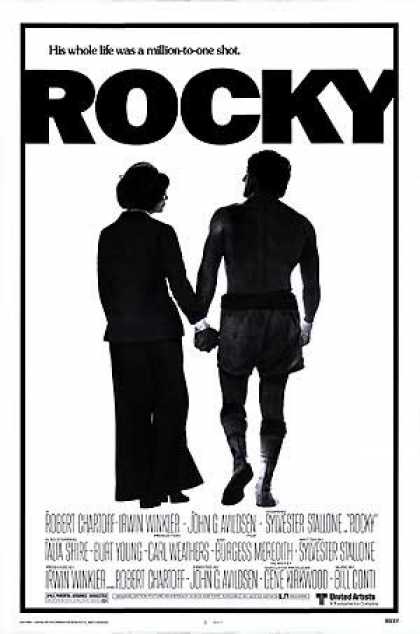
Rocky used the font Franklin Gothic Heavy. The font was chosen in this way because it was bold and big. In some way very broad. The Sans Serif is much less formal and more entertaining. The character Rocky is simple ordinary character so its reflects his persona. The Title looks as if it is punching through the poster as it can barely fit. This further reflects the name.

The structure of Thriller Openings

There are three basic structures when you notice film openings these are:


  • A narrative opening with the titles running thoughout---->e.g. The Stepfather & The Shinning
  • A discrete title sequence---->e.g. Arlington road & Seven
  • Titles over a blank screen, followed by the narrative opening---->e.g. Donnie Darko & Mezrine
  • Stylized editing---->e.g. Taking of Pelham 123

Bag Swap with soundtrack

This was our 'Bag Swap' task that we completed as a group. In the lesson that we were taught on how to use the cameras, we were then told to create a simple scene that included a 'bag swap'.

Wednesday, 19 January 2011

Introduction to Cameras: SKILLS. - Bag Swap.


In the lesson, we were learning how to use and handle the camera that we were going to use to make out short film. We learnt the safety hazards when dealing with the camera and the rules about it.

The safety elements of dealing with the camera was:
  • Don't film in dangerous places - e.g near train tracks or traffic.
  • Don't film in bad conditions - e.g rain/snow.
  • After using the camera/when camera is not in use - close the lens cover - it is the most important part and also the most expensive.
The rules were:
  • Always return the camera on time as there are only 15 in the department and there will always be other classes that will need to film as well.
  • Film in places that are legal as if not, you will be disqualified.
The bag swap

As a task in class, in our groups we had to make a short 'practice' film of a bag swap. We first watched a bag swap from the film 'Collateral'.

We had to make sure that in our film we had at least 12 shots. This exercise was done to help us familarise ourselves with the camera, how to use it, who was going to act ect.

Below is the opening to 'Collateral' which has the bag swap in it.

Monday, 17 January 2011

Introduction to cameras 'Skills'

We were introduced to the safety hazards of working a Film Camera that will eventually use to shoot our opening sequence of our Thriller films. We basically learnt the fundamental valuable skills and responsibilities that I that we had to be aware of when filming.

 Main safety factors when using the Camera’s
As part of a lesson, and practicing to use the camera’s while remembering the safety rules we were told to recreate our own bag swap scene using a maximum of 12 shots. We as a class watched the Bag Swap scene from the movie 'Collateral'. This was used to help us try and establish how the actors were and what we had to reconstruct. We also as a group had to create a storyboard of what we hope to achieve before we began to film. This gave us a chance to come up with ideas and locate actors.


  • Don’t go out filming in bad weather conditions e.g. Rain and Snow
  • Don’t film in dangerous locations e.g. Railways and Train tracks.
  • Return on time: There are only 15 cameras in the Media Department. In turn there is excess demand for cameras; therefore if one person doesn’t bring their camera back on time they are taking up someone else’s valuable recording time. It is vitally important that we plan when we need them and book them before-hand, and return them when they are due.The lens of a camera is its most expensive feature and we must make sure it is closed at all times. This is because if the lenses are open we are increasing the chances of any damage to them.
  • We were also introduced to the skills involved in using a camera. I have learnt that when recording in a dark room, the light intensity is quite low so therefore pressing the ‘gain’ button will improve the quality of footage. This is because it intensifies any light exposure in a limited area.
The Bag Swap Task
As part of a lesson, and practicing to use the camera’s while remembering the safety rules we were told to recreate our own bag swap scene using a maximum of 12 shots. We as a class watched the Bag Swap scene from the movie 'Collateral'. This was used to help us try and establish how the actors were and what we had to reconstruct. We also as a group had to create a storyboard of what we hope to achieve before we began to film. This gave us a chance to come up with ideas and locate actors. Look at the opening of 'Collateral' bag swap moment.

Sunday, 16 January 2011

Detailed analysis of thriller clip analysed in class

vairous films fall under sub-genres withing the genre of 'Thrillers' itself. One of which is the supernatural/murderous passion film called (What Lies Beneath). In the opening scene
the sounds, camera, mise en scene, editing and title usually is a key way of giving us
(the audience) a good introduction as to what to prepare for..

Within the opening scene, suspense is highly emphasised which straight away gets the
audience on egde to find out more about what's happening in the film. The mixture
between eerie music and awkward noises straight away let the audience know that
they're about to watch a tenseful film which will most likely include a lot of jumpy
moments.

In the beginning of what lies beneath we slowly go through steam and end up at a shot
where we hear someone gasping for breath and it ends up being a woman which we see
by when she lifts her head up as if she had just woken up from a terrible nightmare.
The woman in this scene is blonde and as it is a murderous passion this could portray
future acts where this blonde really is in danger. This occured to me because of the slow
speed of the zooming in which emphasizes her expressions as she gasps for air. Also, as
a audience we've subconsciously adapted to the 'blonde-female-victim' in films so this
opening is very effecive as to showing who the victim will most likely end up being.

Furthermore, the fact that she is shown around water and some steamy affects and then
she is shown to attempt to dry her hair by using a blowdryer but then the shot of a fuse
popping is shown and it gives the acter an electric shock. This straight away symbolises
death as it's a well known fact that when you cross water with electricity, it will almost
definately end up leaving hazardous damage and may be fatal. So throughout the first
few minutes we are aware that this woman is targeted by death because of the relations
used by mise en scene, lyk the overflowing water and near death-by-drowning experience
and the electricity. The contrast shows danger is lurking around its victim and will be
throughout the film.